
Why This Shelter Dog Was Marked As ‘Dangerous’
Shancy did not arrive at the shelter with a neat little rescue story.
She showed up at someone’s mother’s house, reportedly attacked chickens and was brought in as a stray with no collar, no ID and no microchip. By the time Rocky Kanaka met her three days later, the shelter had already placed a warning on her kennel card: “Go slow. Scared.”
But the chicken incident was not the most important part of Shancy’s story.
Under all that scruffy, tangled fur was a dog who could not stop scratching. Her coat was matted around sensitive areas. Staff had flagged possible hot spots on her chest and tailbone. She was dirty, itchy, overwhelmed and so wired from stress that she could barely settle.
At first glance, Shancy looked like a difficult little dog with a big attitude.
A closer look showed something else entirely: a scared, uncomfortable dog whose body had been asking for help long before anyone understood her behavior.

A Small Dog With Big Terrier Energy
Shancy is estimated to be about 2 years old and is listed by the shelter as a poodle mix. But watching her move around the room, Rocky suspected there might be terrier in there too.
That would explain a lot.
Shancy was alert, busy, determined and highly interested in treats. She had the sharp little brain of a dog who wants something to do, even if she has no idea what the rules are yet.
It may also explain the chicken incident. Terriers were originally bred to chase, hunt and work. That prey drive can be intense, especially in a dog who has been roaming, stressed and left to make her own decisions.
That does not mean Shancy is broken. It means she needs the right kind of home and the right kind of structure.
No chickens would be smart. But walks, puzzle toys, training games and clear boundaries? That is where a dog like Shancy can start to shine.
Why Rocky Didn’t Rush Her
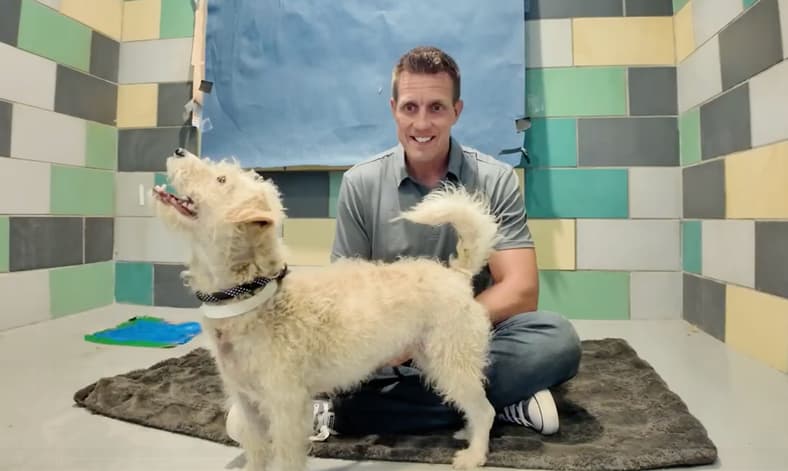
When Rocky first sat with Shancy, he did not immediately smother her with attention.
That may seem counterintuitive, especially when a dog looks scared. But nervous dogs often need space more than they need affection. Getting in their face can add pressure, even when the intention is loving.
So Rocky stayed calm. He kept the leash loose. He let her move, sniff and decide when she was ready to come closer.
At first, Shancy was restless. She circled. She scratched. She seemed like a tiny engine running too hot. But slowly, she began to shift. She came closer. She tried to climb into Rocky’s lap. She started taking treats.
That was the first crack in the armor.
Shancy was not aggressive. She was overstimulated, uncomfortable and unsure who to trust.
The Treats Told Rocky What Adopters Need to Know

Once Shancy discovered the treats, another side of her came out.
She was focused. She was motivated. She wanted to work for them. Rocky broke the treats into small pieces and started using them to ask for simple behaviors like “sit.”
She did not turn into a polished obedience dog in five minutes, and nobody should expect that. But she did show something important: she is trainable.
For a dog like Shancy, that matters.
Food-motivated dogs often respond well to positive reinforcement because the reward is clear. With short, consistent sessions, Shancy could likely learn quickly. She needs someone who will give her a job instead of expecting her to magically relax with nothing to do.
Her adopter should think in small wins: a sit, a check-in, a calm walk, a puzzle toy, a few minutes of focused training.
Tiny dog. Big brain. Use accordingly.
The Real Emergency Was Under Her Coat
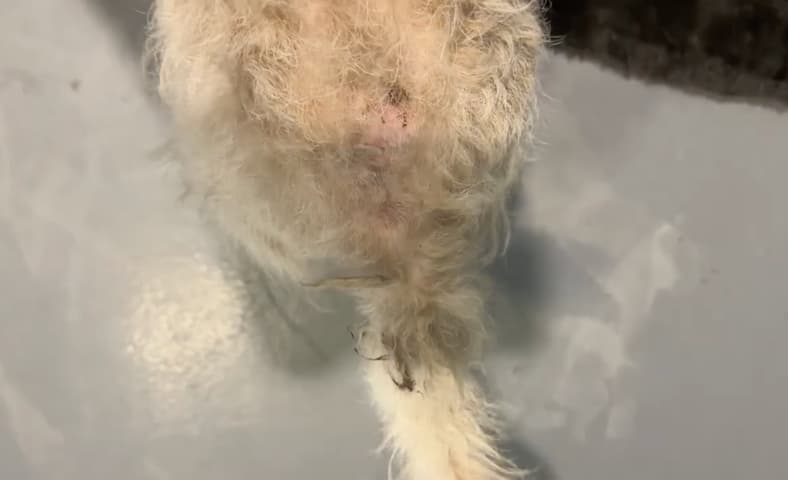
The more time Rocky spent with Shancy, the clearer it became that her grooming needs were not cosmetic.
Her fur was matted, especially around her tail area, where the tangles appeared painful when she sat. She also had hot spots, which are irritated patches of skin that can become intensely itchy and uncomfortable.
That helped explain why she could not stop scratching and why she seemed so unable to relax.
Shelter staff had already begun treating her with medicated spray, but Shancy needed more than that. She needed the mats removed, her skin cleaned and a medicated bath to help calm the irritation.
So Rocky brought her to the grooming van.
A Grooming Session That Could Have Gone Either Way
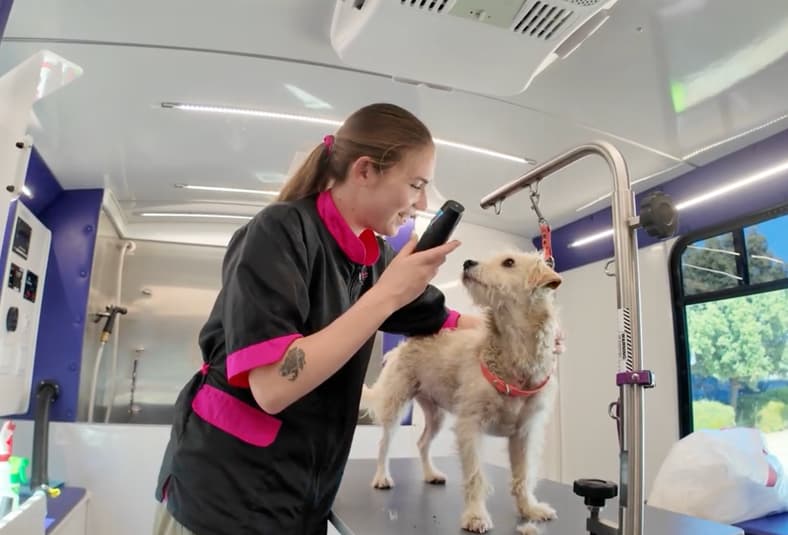
For a dog with “go slow” written on her kennel card, grooming was a real test.
Clippers, tubs, nail trims and dryers can be scary even for dogs who have been groomed before. For Shancy, no one knew how she would react.
But she surprised everyone.
She tolerated the clippers, which allowed the groomer to carefully remove the mats without shaving her completely down. The goal was to make her comfortable while keeping her looking like herself.
Then came a medicated chlorhexidine bath to help soothe her irritated skin. After that, the team worked through the finishing touches: towel drying, nails, ears and the blow dryer.
The dryer was the part Rocky was most nervous about. Loud air can be a lot for a stressed dog. But Shancy kept trying. She allowed handling. She let the groomer hold her paws. She made it through without needing extra support around her ears.
For a dog who had arrived scared, itchy and defensive, that was not a small thing.
The Dog Beneath the Mats
After the groom, Shancy looked completely different.
The mats were gone. Her coat was cleaned up. Her skin had been treated. She carried herself with more confidence, her head higher and her body lighter.
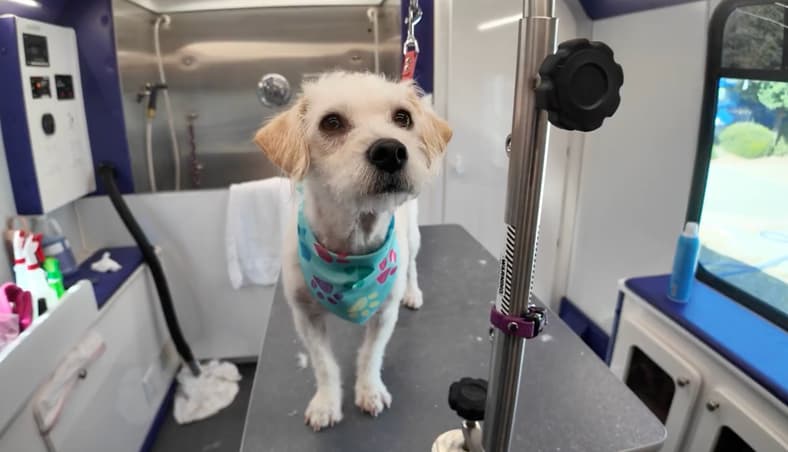
That kind of transformation is easy to see on the outside. The bigger change is what it can do for the dog inside.
A matted, painful dog may look anxious or difficult. An itchy dog may seem restless. A scared dog may be labeled before anyone realizes how much discomfort is driving the behavior.
Once Shancy got relief, people could finally see more of who she really was: smart, spunky, affectionate and ready to connect.
What Shancy Needs Next
Shancy is available for adoption, and she needs someone who understands both sides of her.
She is not a low-energy lap dog who wants to be carried through life like a purse with paws. She is small, clever and driven. She needs walks, enrichment, training and calm guidance.
Her best home will be one without chickens or small animals that could trigger her prey drive. She needs an adopter who can help her redirect that energy into better choices.
Most of all, she needs someone who will look past the warning on her kennel card and see the dog underneath.
Shancy came in as the little dog who went after chickens.
But after one careful sit-down, one much-needed groom and a lot of patience, she left looking like something much more hopeful: a dog who finally got a fair shot.