I Almost Walked Right Past Him, What Was Under the Blanket Broke Me
I almost missed him.
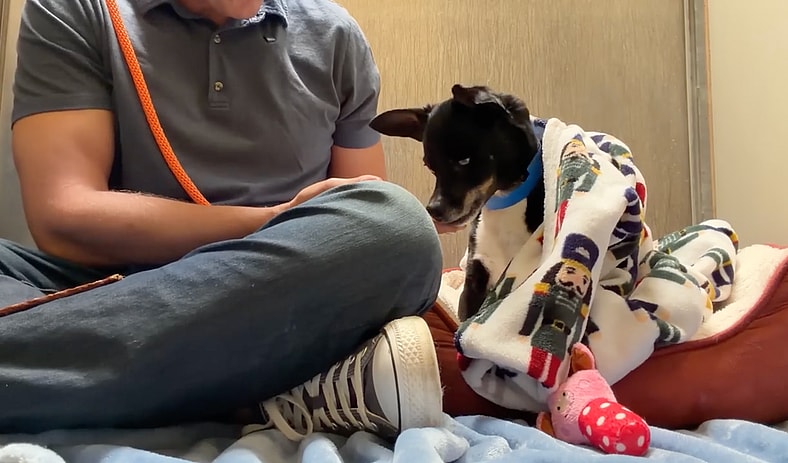
I walked past the kennel and thought I was looking at a pile of laundry. A blanket, bunched up in the corner, barely moving. But then I looked closer… and there was a dog underneath it.
He had been there for two weeks.
Blind. Senior. No name. No one calling for him.
That’s the kind of situation that doesn’t just tug at you. It stops you.
So I asked the team to give his kennel mate some time outside, and I went in to sit with him. Not to fix anything. Just to understand what he needed and see if I could help him feel safe again.
Why Blind Dogs Do This
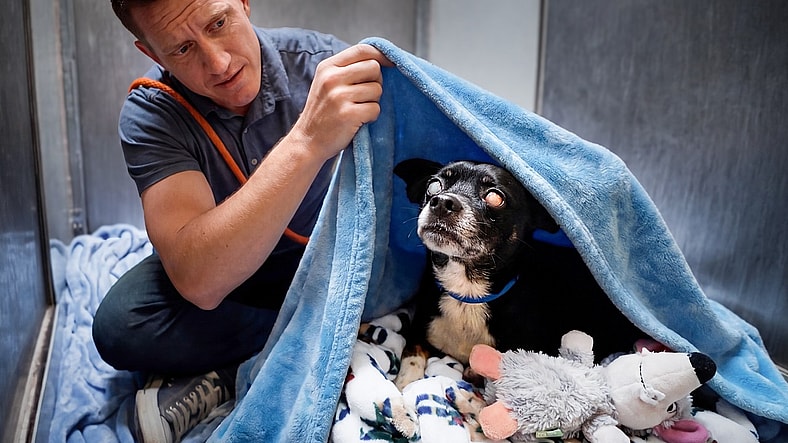
When I saw him burrowed deep under that blanket, I knew exactly what was going on.
Blind dogs do this a lot. They tuck themselves into corners, under beds, into blankets, anywhere that feels enclosed. It’s not random. It’s instinct.
When you lose your sight, your world gets unpredictable. You can’t scan a room, can’t anticipate movement. So instead, you create your own “safe zone.” Something consistent. Something you can feel.
I’ve seen it firsthand with my own dog, Kobe, a blind Cane Corso who’s been defying every odd thrown at him for years. Dogs like this don’t give up. They adapt. But they need help doing it.
And right now, this little guy didn’t have that.
Meeting Him, Slowly
I didn’t rush it.
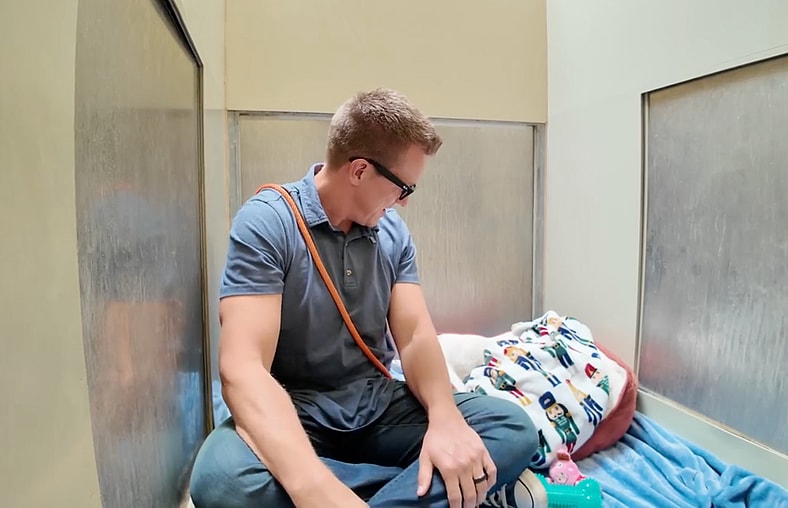
When a blind dog wakes up and suddenly there’s someone new in their space, that can be terrifying. So I started with small movements, letting him register that I was there without overwhelming him.
He didn’t react much at first. That told me something else might be going on. Possibly hearing loss too.
So I switched strategies.
Lower voice. Slower movements. Letting him feel vibrations instead of relying on sound. I brought treats, thinking that would help create a quick positive association, but he surprised me.
He didn’t care about the food.
He just wanted to find me.
The First Breakthrough
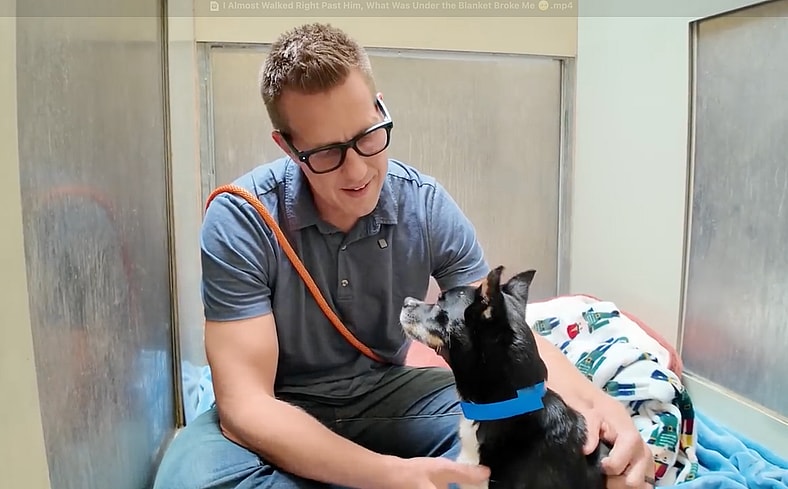
Instead of taking the treats, he started licking my hand.
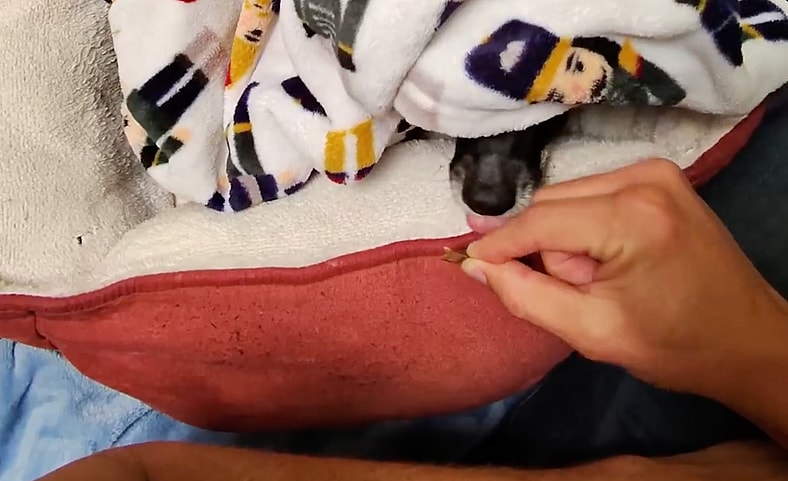
And that’s when it clicked.
For a dog who can’t see, maybe can’t hear, touch becomes everything. That’s how they map the world. That’s how they figure out who you are.
So I let him explore. No pulling away. No correcting. Just letting him learn me at his own pace.
And little by little, you could see the shift.
His body relaxed. His breathing slowed. That tight, uncertain energy started to melt into something softer.
He realized… he was okay.
The Backstory We Didn’t Want
Once we got some info, things got harder to hear.
He had a microchip, which usually means there’s an owner. But for two weeks, the shelter tried everything—calls, texts, even going through records—and nothing. No response.
He was dropped off through night intake, likely by someone who wasn’t the owner.
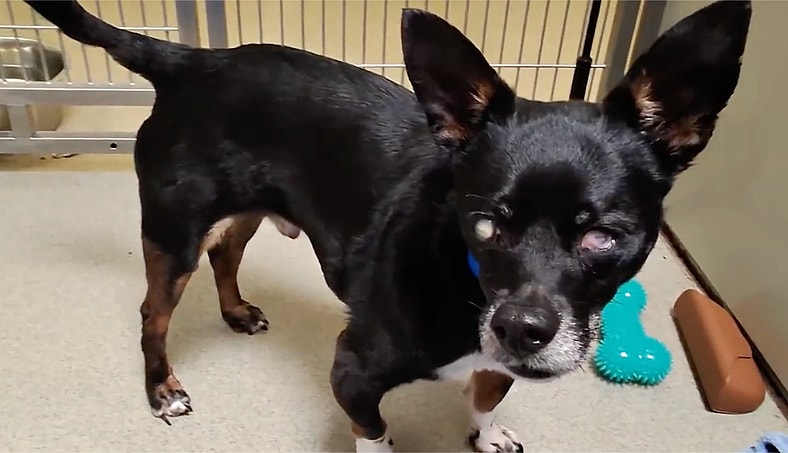
And physically, it showed.
- Underweight
- Overgrown nails
- Severe dental issues
- Possible old eye injuries that were never treated
This wasn’t just a dog who got lost.
This was a dog who had been slowly slipping through the cracks for a while.
Naming Him Larry
He didn’t even have a name.
And I don’t know why, but sometimes that part hits just as hard as anything else. A dog without a name feels… invisible.
So we started throwing out ideas.
Nothing stuck at first. Then someone said “Larry.”
And that was it.
Larry.
It fit him. Quiet, gentle, a little old-soul energy. The kind of name that makes you picture someone who just wants to sit nearby and be part of things.
And when we said it, his ears perked just a little.
Close enough.
What Larry Really Needs
Larry doesn’t need a high-energy home. He’s not going hiking or running on the beach. He’s not going to tear up your furniture or keep you up all night.
What he needs is simple, but not easy to find.
He needs someone willing to meet him where he is.
A home where:
- Furniture stays consistent so he can learn the layout
- Movements are predictable
- Touch replaces sight as his main connection
- Someone understands that trust might take a minute, but it’s worth it
There are even simple tools, like halo harnesses, that help blind dogs navigate safely. But more than anything, he just needs patience and consistency.
The Reality of Senior Dogs
I always hear the same thing:
“I don’t think I could adopt a senior dog. It would be too hard.”
And yeah, it is hard.
But here’s the flip side.
Sometimes you’re not giving them years. Sometimes it’s months. Sometimes, honestly, it’s days.
But those days matter.
I’ve had a senior dog come home, feel safe for the first time in who knows how long, and pass that same night. And I still believe that mattered.
Because they didn’t leave this world alone.
Larry deserves that same chance. Whether it’s for a year or a week, he deserves to know what it feels like to be safe again.
The Moment That Says Everything
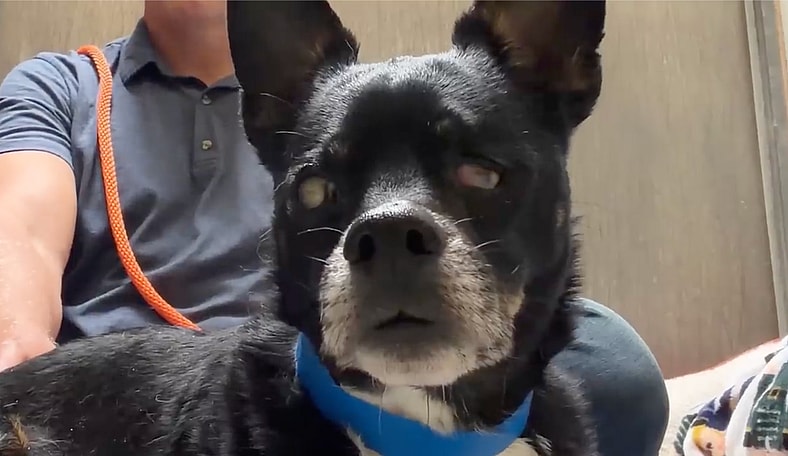
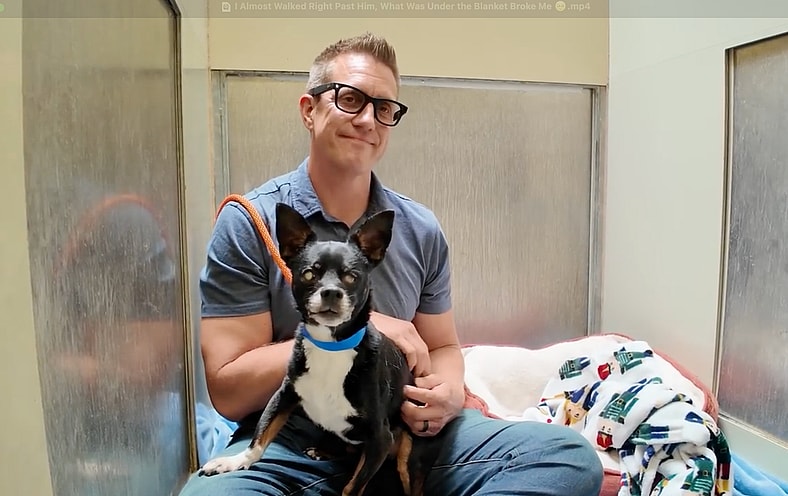
By the end of our time together, Larry wasn’t buried under the blanket anymore.
He was out.
Exploring.
Leaning into touch.
Wagging his tail just a little.
That’s the thing about dogs. They don’t need a full life story to trust you. They just need one moment that feels different enough to believe things might be okay.
Next Steps
Larry is currently at Animal Friends of the Valleys, and he needs someone local who can come meet him and give him that next step.
If you’re within driving distance of Wildomar, California, go see him.
If you can’t adopt, share his story.
Because Larry is the kind of dog people walk past without realizing he’s even there.
And now you know better.