100 Days Alone: Why This Shelter Dog Gets Skipped Every Single Time
One Hundred Days
Twix had been at the shelter for 100 days when I walked into his kennel.
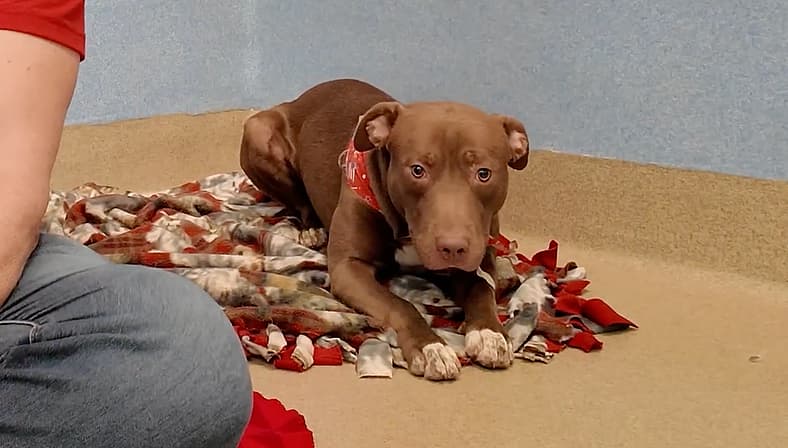
He was pressed against the wall, ears pinned back, tail tucked beneath him. It still wagged, barely. One part of him wanted to trust me. The rest of him knew better.
There was no obvious reason he had been overlooked.
Twix was about 2 years old. He was house-trained, good with children and comfortable around other dogs. He had soft brown-and-white fur, expressive eyebrows and white paws that looked like little socks.
Yet every dog paired with him had been adopted.
Twix remained.
I wanted to know why.
A Dog Who Kept Losing Everyone
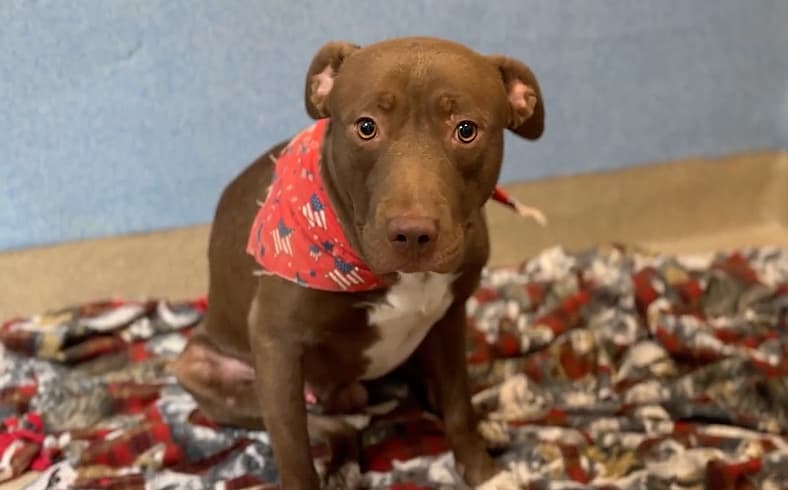
Before arriving at Animal Friends of the Valleys in Southern California, Twix and another dog had reportedly been given away at a swap meet.
Someone took them, hoping to find them homes. After trying for roughly six months, that person brought them to the shelter.
The other dog was eventually rescued.
Twix was left behind.
Because shelter workers knew he liked other dogs, they continued pairing him with kennel mates. One after another, those dogs were adopted or transferred.
Twix watched them leave.
There was no behavioral red flag buried in his file. He was not aggressive. He did not require unusual medical care.
He was simply scared.
In a shelter, that can be enough to make a good dog invisible.
The Dog People Walk Past
Shelters are terrible places to make a first impression.
There is barking, metal clanging, unfamiliar smells and a constant stream of strangers. Some dogs rush toward the kennel door, wagging and jumping.
Twix disappeared into the corner.
A family might look at him and see a dog who would not approach. Then they might meet the dog next door, the one pressing happily against the gate.
That dog goes home.
The quiet dog stays.
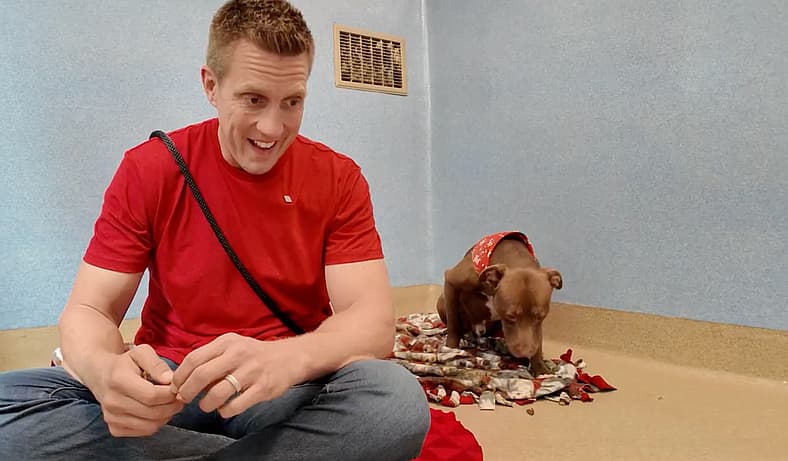
I sat on the floor and turned slightly away from Twix. Direct eye contact can feel like pressure to a frightened dog.
I began placing treats near him, then slowly moved them closer to me.
I call the process “Pac-Man.” It is not a technical term. It is simply a trail of treats that allows a dog to move forward one small decision at a time.
Twix followed.
Courage, Measured in Inches
With scared dogs, progress rarely looks dramatic.
Twix stretched his neck toward a treat. Then he moved one paw. He stood, backed away and tried again.
Fear is an emotion. Courage is a choice.
Twix was afraid, but he kept choosing to move closer.
When I offered a treat from my open hand, he retreated. I did not follow him or push harder. I lowered the pressure and returned to what had been working.
Eventually, he took it.
Then he looked me in the eyes.
It lasted only a second, but it told me everything. He wanted connection. He just did not trust that it would last.
As I shifted around the kennel, his body slowly relaxed. His eyes began to close.
For a shelter dog, sleep can be an act of trust. The environment keeps many dogs in a constant state of alert.
When Twix started to doze beside me, I told him what every abandoned dog deserves to hear.
None of this was his fault.
The Real Twix
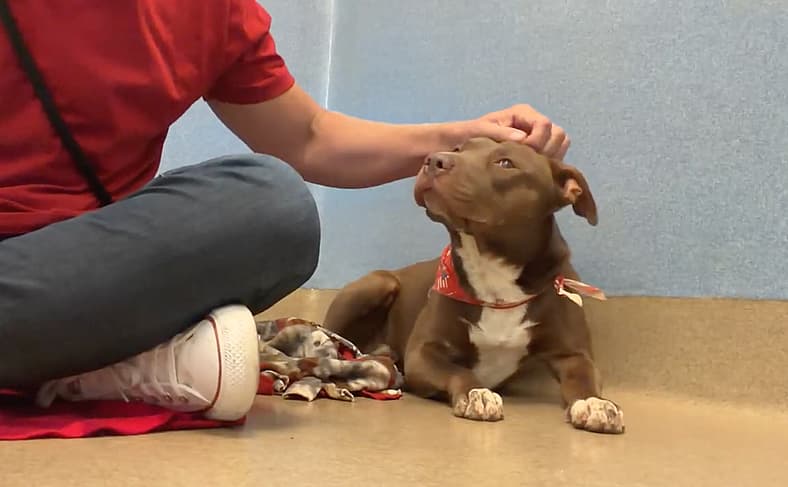
Twix allowed me to pull him closer, but I kept my arms loose so he could leave.
He seemed to want affection and fear it at the same time.
That is what repeated rejection can do. A dog still wants closeness, but closeness has become a warning. Every new bond might end with another goodbye.
Twix may not become a different dog the moment he enters a home.
It could take days. It could take months. He may always be shy around strangers. He may hide when visitors arrive.
That does not mean he will not be an extraordinary companion.
Not every dog needs to love everyone.
Some dogs save everything for the person who finally chooses them.
I suspected Twix might also need another dog.
The shelter team brought in a husky named Luna.
Then Luna Walked In
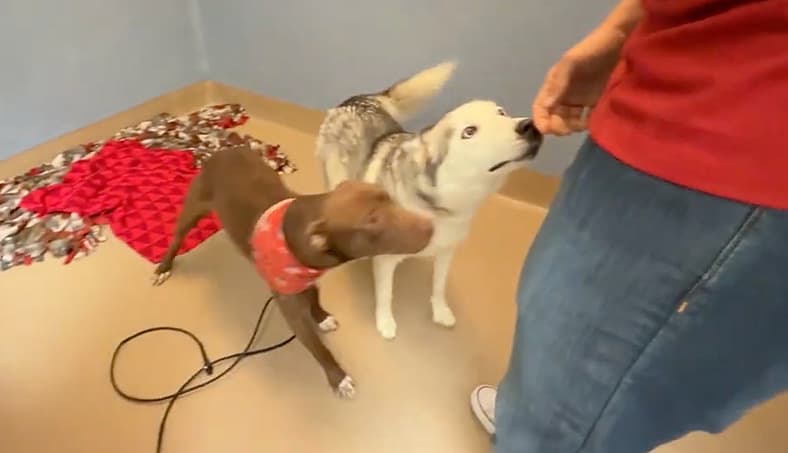
The change was immediate.
Twix stood taller. His tail started moving. He followed Luna around the room and approached me with a confidence I had not seen all day.
The dog who had been folded against the wall was suddenly curious and engaged.
Luna gave him something I could not: proof that the room was safe.
Sometimes a frightened dog does not need more persuasion.
Sometimes he needs a friend.
Nothing Was Wrong With Him
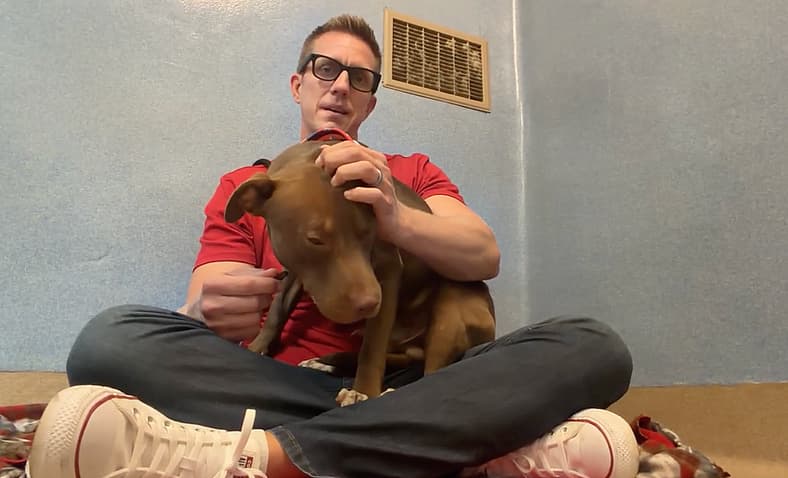
Watching Twix with Luna answered the question that brought me there.
Nothing was wrong with Twix.
The dog people saw in the kennel was not his full personality. It was a stress response.
Alone, he shut down.
Beside another dog, he came alive.
Twix may be best suited for a home with a confident dog already in it. He needs patience, stability and someone who will not mistake fear for a lack of love.
He was still available for adoption when I met him. Animal Friends of the Valleys also has a transport network that may help qualified adopters outside Southern California bring him home.
Adopting Twix should not be an impulsive rescue mission. He deserves someone prepared for the dog he is, not someone expecting an instant transformation.
But I saw what was waiting beneath the fear.
I saw it when he took the first treat.
I saw it when he fell asleep beside me.
And I saw it when Luna entered the room and Twix became the dog he had been protecting all along.
Every dog beside him had been chosen.
Now Twix needs someone to choose him on purpose.