They Warned Me About This Dog. I Sat Down Anyway
When I met Pork, a fearful Dachshund mix who had spent more than 90 days in a shelter, staff warned me to move slowly. He’d been labeled “fractious,” a term rarely used for dogs, after repeatedly nipping out of fear. But over the course of a single afternoon, I watched this terrified little stray reveal the sweet, affectionate dog that had been hiding beneath his fear all along.
At first glance, Pork wasn’t the dog most visitors would notice. He wasn’t standing at the front of his kennel begging for attention. He wasn’t barking, jumping, or trying to make eye contact with everyone who walked by. Instead, he was tucked behind his kennel mates, trying to make himself as small as possible. The longer I watched him, the more obvious it became that he wasn’t resting or relaxing. He was surviving.
Dogs like Pork often get overlooked in shelters. While confident dogs put themselves front and center, fearful dogs fade into the background. They watch other dogs leave with new families while they remain behind, trapped in a cycle of stress that becomes harder to break with each passing day.
A Shelter Dog Carrying More Than Fear

The shelter estimated Pork to be around two years old. He had arrived as a stray with no microchip, no known owner, and no one looking for him. More than three months later, he was still waiting.
As staff filled me in on his history, one detail stood out. When Pork first arrived, shelter staff marked him as “fractious.” It’s a term more commonly used for feral cats than dogs, describing an animal so frightened that it becomes defensive in order to protect itself. The label wasn’t meant to suggest aggression. It was meant to explain the depth of his fear.
That distinction matters.
One of the biggest misconceptions people have about shelter dogs is that nipping automatically means aggression. In reality, many fearful dogs nip because they don’t know what else to do. They’re overwhelmed, scared, and trying to create distance between themselves and whatever feels threatening. That’s very different from a dog who is actively trying to harm someone.
Everything I was seeing from Pork pointed to fear, not aggression.
When a Dog Won’t Take a Treat
The first thing I did was offer Pork one of my homemade treats. Most dogs can’t resist them, even nervous dogs. Pork wanted nothing to do with it.

I tried again. Same result.
For dog lovers, that might not seem significant, but it tells me a lot. Treats represent more than food. They’re comfort, reward, and connection. When a dog refuses a treat, it’s often because fear has completely taken over. In Pork’s case, his survival instincts were working overtime.
I could see him thinking about it. His eyes would track the treat. He’d lean forward slightly. Then fear would win, and he’d retreat again.
Eventually, I tried a different approach. Instead of tossing treats toward him, I offered one directly from my hand. After a long pause, Pork finally accepted it.
It wasn’t about the treat.
It was about trust.
That tiny moment told me there was another dog buried underneath all that fear, and if we gave him enough time, we might get to meet him.
The Breed Mystery
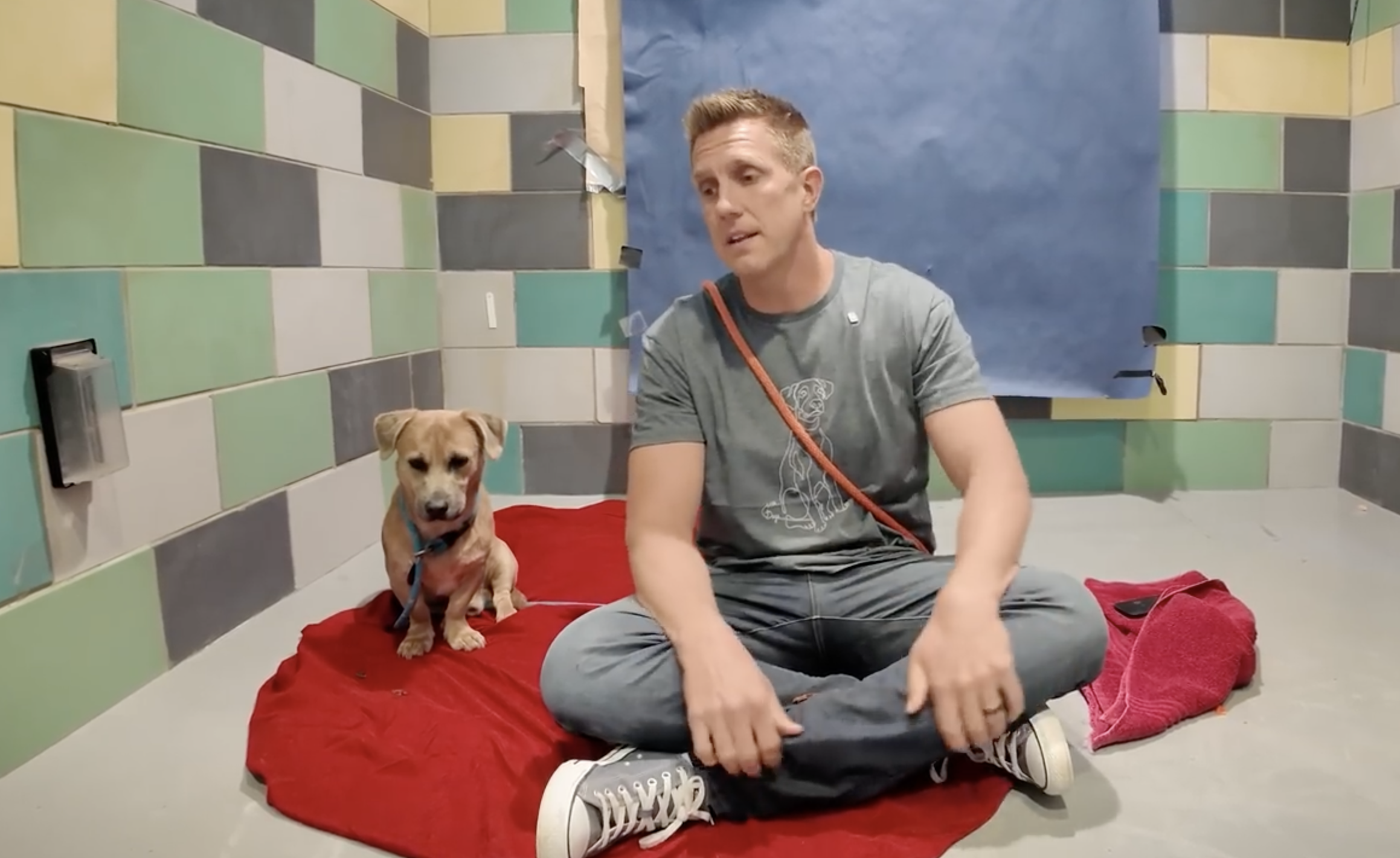
As Pork started to relax, I found myself distracted by how ridiculously cute he was. His body looked like it belonged to one dog while his head looked like it belonged to another. He had short legs, a long body, oversized paws, and what felt like a comically large head for such a small frame.
Naturally, I texted a picture to Kelly.
Her response came back almost immediately.
“Dachshund mix.”
Of course she was right.
The shelter’s notes suggested he might be a Dachshund mixed with Shepherd, and possibly Basset Hound. Looking at him, I could see all of it. Whatever combination created Pork, the result was one of the most unique little dogs I’ve met in a while.
More importantly, he was starting to show glimpses of his personality. Every treat he accepted and every curious glance in my direction chipped away at the wall he’d built around himself.
Taking the Pressure Off

One thing staff had noticed was that Pork became especially anxious when a leash was attached. Whenever he felt tension on the lead, he’d panic and start nipping at it.
That’s actually not uncommon for dogs who have never been properly leash trained or who associate leashes with stressful experiences. Instead of seeing a leash as a pathway to walks, adventure, and safety, they view it as something restrictive and frightening.
Once I was able to safely remove the lead, Pork’s body language changed almost immediately.
His breathing slowed.
His muscles softened.
He yawned.
For the first time all afternoon, he looked comfortable.
Fearful dogs often become fixated on whatever is causing them stress. In Pork’s case, every tug on that leash was a reminder that he was trapped in an environment he didn’t understand. Taking that pressure away gave him the opportunity to decompress and reset.
Soon after, he started taking more treats. Then he moved closer. Before long, the dog who had been hiding in the back of the kennel was sitting beside me.
Then he climbed into my lap.
The Words Every Dog Deserves to Hear

As Pork settled in, I started talking to him.
I told him he was brave.
I told him he was a good boy.
I told him that whatever happened before he arrived at the shelter wasn’t his fault.
I don’t know if anyone had ever told Pork those things before. I don’t know what his life looked like before he became a stray. But I do know that dogs pay attention to our energy, our tone of voice, and our intentions far more than most people realize.
As I spoke to him, he seemed to melt a little more with every passing minute.
The transformation wasn’t dramatic. There wasn’t some magical movie moment where he suddenly became a different dog. It was quieter than that. It was a fearful dog slowly deciding that maybe, just maybe, he didn’t have to be afraid all the time.
Why Grooming Matters

As Pork relaxed, another issue became impossible to ignore.
The little guy needed a serious groom.
His coat was overgrown, his nails were long, and it was obvious he hadn’t received much routine care in a very long time. That’s one reason I’m so excited about launching our mobile grooming truck. Most shelters simply don’t have groomers on staff, which means many dogs go months without receiving basic grooming services.
People often think grooming is about making dogs look pretty.
It’s not.
Grooming improves comfort, helps prevent skin issues, reduces matting, keeps nails healthy, and often boosts a dog’s confidence. A freshly groomed dog frequently feels better physically and emotionally.
I had a feeling Pork would benefit from that.
What I didn’t expect was how well he’d handle it.
Pork’s First Spa Day

Before we started, staff reminded us that Pork could become defensive if he felt trapped or overwhelmed. Everyone agreed we’d take things slowly and let him set the pace.
To my surprise, Pork hopped onto the grooming truck almost immediately.
The same dog who wouldn’t take a treat a couple of hours earlier willingly climbed aboard and began exploring his surroundings. It felt like a completely different dog.
Our groomer Cameron moved carefully. Instead of using high-pressure water, she diluted shampoo in a squeeze bottle and gently worked it into his coat. The goal wasn’t speed. The goal was helping Pork feel safe.
And somehow, it worked.
As the bath continued, his body visibly relaxed. His shoulders dropped. His breathing stayed steady. He wasn’t fighting. He wasn’t panicking. He was simply allowing people to care for him.
Then came the nail trim.
Then the Dremel.
Then the blow dryer.
Every step that could have gone wrong didn’t.
Pork handled it all beautifully.
At one point, we even tried a happy hoodie to help muffle the sound of the dryer, but Pork seemed perfectly content without it. He stood calmly through the entire process as though he’d been getting groomed his whole life.
The dog everyone worried about was proving everyone wrong.
The Real Pork Finally Appears

By the end of the grooming session, Pork looked fantastic.
More importantly, he looked comfortable.
His eyes were brighter. His posture was softer. His personality was beginning to emerge in ways we hadn’t seen earlier that day. It was hard to believe this was the same dog who had been trembling in the back of his kennel just hours before.
What struck me most wasn’t the groom itself.
It was the reminder that so many shelter dogs are carrying stories we can’t immediately see. Fear can hide a dog’s true personality. Anxiety can make a sweet dog appear distant. Stress can make a loving dog seem unreachable.
But when you give those dogs time, patience, and understanding, incredible things can happen.
Next Steps
Pork is still looking for the family he’s been waiting for. His future adopter should understand that trust takes time and that fearful dogs don’t transform overnight. But for someone willing to be patient, Pork offers the kind of bond that only comes from helping a dog find his way back to confidence.
The shelter may have called him fractious.
After spending the day with him, I have a different word in mind.
Survivor.