This Shelter Dog Didn’t Move for 47 Minutes, Then Something Incredible Happened
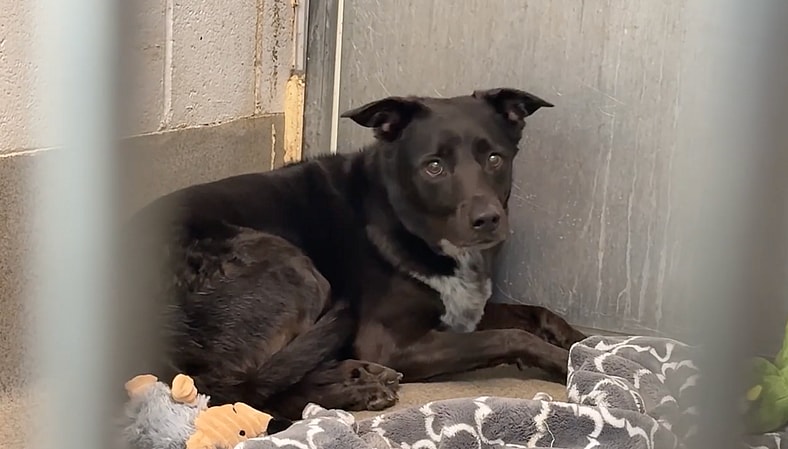
When I first saw Mia, she looked completely frozen.
Not nervous. Not shy. Frozen.
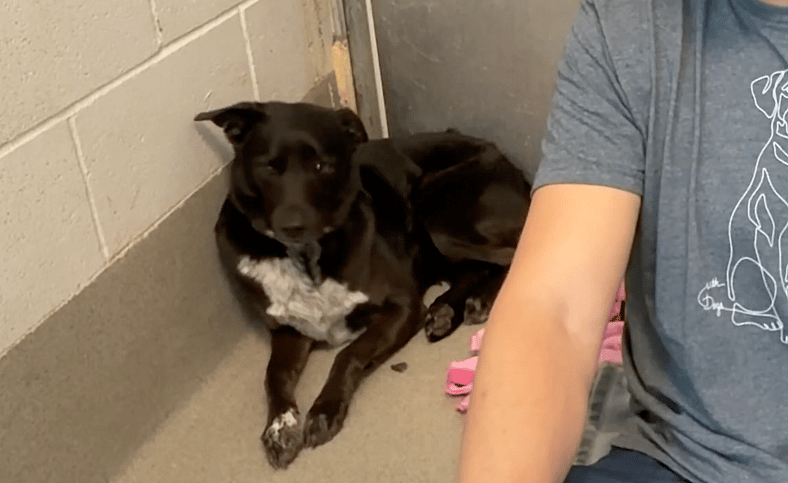
She was curled into the back corner of her kennel like the world had ended and she was trying to disappear before it got any worse. She would not look at me. She would not stand up. She barely moved at all. And honestly, one of my first thoughts was: what if she never does?
That was the energy she had.
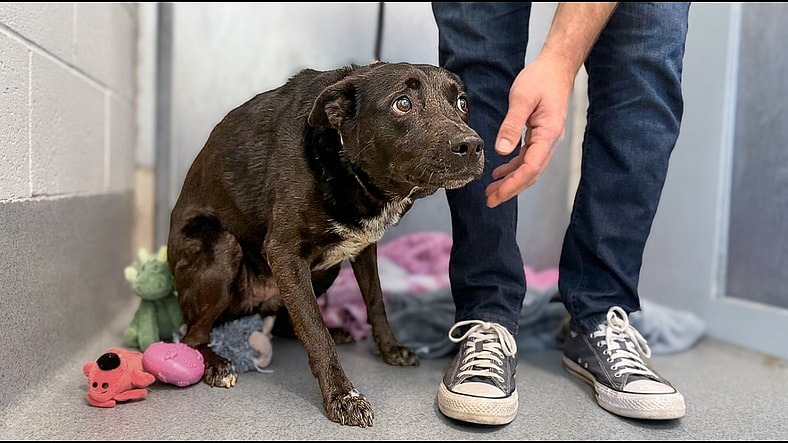
And when you’ve sat with as many shelter dogs as I have, you start to recognize the difference between a dog who’s simply scared and a dog who looks like trauma has taken over the whole building.
Mia looked like trauma.
Mia’s backstory makes this even harder
What made it even more heartbreaking is that Mia wasn’t a stray with no history.
She had a family.
Mia had first come into the shelter as a puppy, part of a litter, back in 2019. She was adopted out from the shelter and spent the next seven years in a home. Seven years. Then suddenly, she was back.
The reason given was that she “doesn’t like kids,” and the owner had grandchildren.
That hit me hard.

Because when I looked at Mia, I did not see some dangerous, impossible dog. I saw a dog who was overwhelmed, shut down, and completely confused about why her whole world had been ripped away. Seven years in a home, then back into a loud kennel, back into uncertainty, back into survival mode. That kind of whiplash will break a lot of dogs open.
And Mia is a black dog in a shelter, which already stacks the odds against her. Add fear, shutdown behavior, and a return after seven years, and suddenly this sweet girl is almost invisible to the average adopter. That’s the brutal math of shelter life.
She looked like a herding dog from the start
Even before I got all the details, I could tell Mia was likely a herding breed mix, probably an Australian Cattle Dog mix.
It was in her size, her build, that adorable little paw, and the markings on her chest. Herding dogs are smart, sensitive, driven, and always clocking the room. They are not dogs who do well with chaos and no guidance. They were bred to notice movement and respond to it.
So when I heard she’d been returned because of issues around kids, my mind went straight there.
A lot of herding dogs are mislabeled as “bad with kids” when what’s really happening is they’re doing exactly what they were bred to do. Kids run, squeal, dart around, bounce off furniture, and generally operate like tiny caffeinated squirrels. A herding dog sees all that movement and thinks, Okay, clearly nobody here is managing traffic, I’ll take it from here.
That can mean circling, nipping, barking, or trying to control the motion. It does not automatically mean aggression. It often means the dog needed structure, training, boundaries, and probably a quieter setup.
The first 47 minutes were all about patience
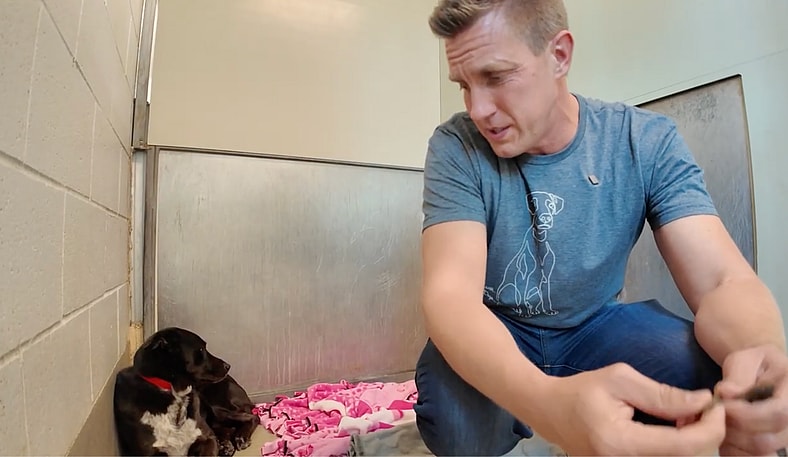
I started the way I often do with dogs like Mia: quiet energy, soft body language, no pressure, and treats.
At first, she wouldn’t take them from me. Then she started sniffing them. That may seem tiny, but sniffing matters. Getting a dog’s nose working helps pull them out of that panic spiral because it gives their brain something else to do besides drown in fear.
So I kept going.
I tossed treats gently. I positioned myself in a way that didn’t pressure her. I avoided too much eye contact. I stayed low. I stayed calm. I let her decide how much interaction she could handle.
And then, little by little, the cracks started to show.
She ate one treat. Then more. Then she started choosing the treat from my hand over the treats already on the floor. That told me something huge: Mia didn’t just want food. She wanted connection. Even through all that fear, she was still reaching for affection.
That’s when I knew we had something to work with.
Why I use treats differently with dogs like Mia
This is important, because what I was doing with Mia is not the same as standard obedience training.
When a dog is this shut down, I’m not worried about perfect manners. I’m worried about safety, trust, and helping the dog re-enter the world without feeling forced. That means I may use larger treats at first so the dog doesn’t have to get as close to my hand. I may offer them from underneath instead of reaching over their head. I may reward tiny moments that would seem almost invisible to most people.
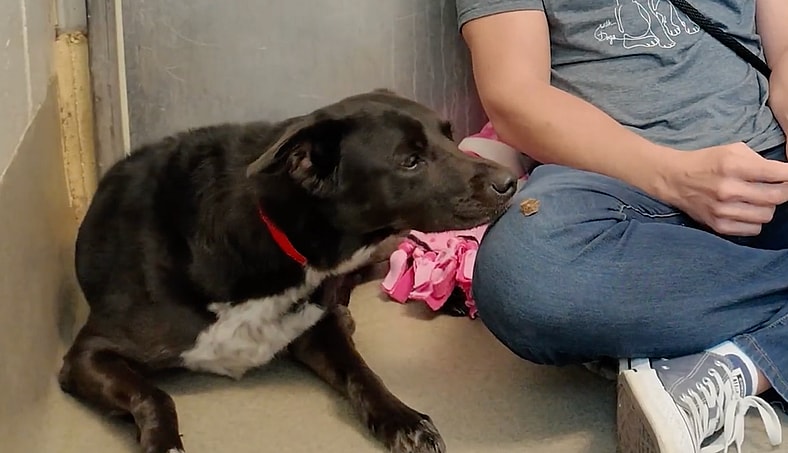
A weight shift. A glance. A sniff. A small stretch forward.
With Mia, every one of those moments mattered.
And once she let me touch her paw while giving treats, that was another clue. It told me affection was not off the table. She was scared, yes, but she was not unreachable.
Saying her name changed everything
Once Alexis pulled up more of Mia’s history and texted me her name, I decided to try something.
I started speaking to her directly.
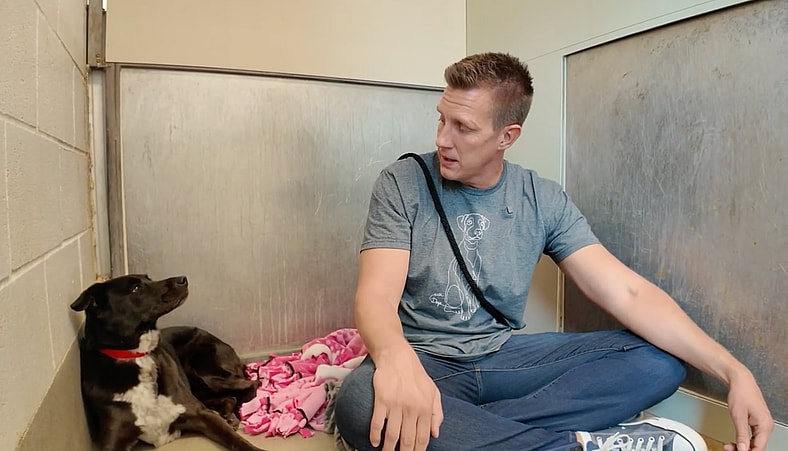
I told her she was a good girl. I told her none of this was her fault. I told her we’d help her find the right family. I told her that if she was just doing what she’d been bred to do, then what she needed was guidance, not punishment.
And when I said her name, Mia looked at me.
Not a random glance. Not a stress flick. A real look.
You could almost see it on her face: How do you know my name?
That moment cracked me open a little bit, because it reminded me there was still a whole dog in there. She had not disappeared. She was still present, still listening, still hoping someone might understand her.
The Scoop made perfect sense for Mia
Once Mia started thawing out, I started thinking about what else might help her regulate. For a dog like this, The Scoop could actually be a great fit.
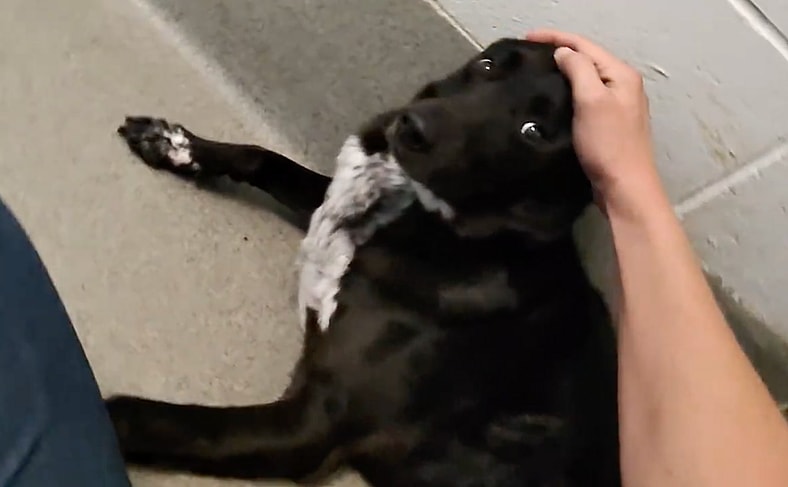
Compression and gentle comfort can be especially helpful for sensitive herding dogs, particularly when they’re overstimulated or emotionally flooded. I would never force it on a dog, but for Mia, the idea made sense. She had that tightly wound, curled-in, fetal-position energy where a little security could go a long way.
Dogs like Mia often do well with things that help them feel contained and grounded. The Scoop can create that cozy, safe feeling while still letting the dog decompress at their own pace.
For a dog who looked like she was trying to vanish into the wall, comfort matters.
Love Letters with Dogs brought out another side of her
Then came one of my favorite parts of these visits: opening mail and toys sent in by supporters.
That’s where Mia started to change even more.
As soon as the packages came out, her nose got busy. She started sniffing. Investigating. Choosing toys. Engaging with the moment. It may not sound dramatic, but trust me, it was. This was the same dog who had looked like she might not move at all.
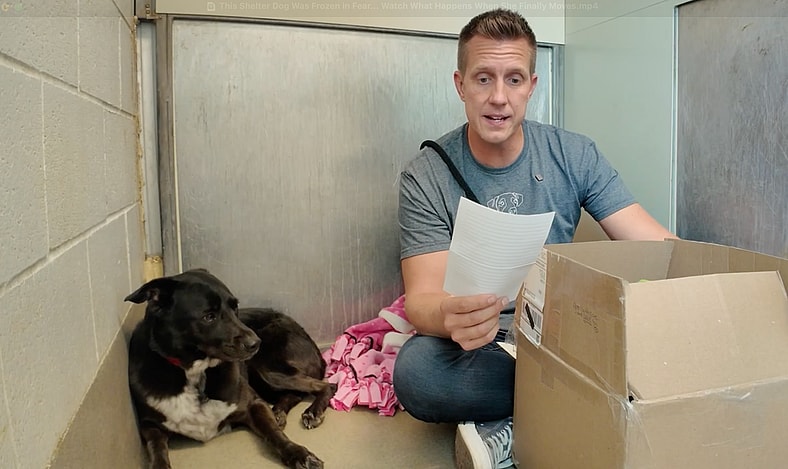
Now she was curious.
She seemed especially interested in the softer toys, and it was fun watching her little personality start to peek through. The loofah toy got her attention. The hedgehog did too. You could feel the room shifting from grief to possibility.
That’s one reason these moments matter so much. They don’t just give the dogs supplies. They give them experiences that feel a little more like home.
Then Mia stood up
After all that time in the corner, I finally tried something bigger.
I brought out the leash.
And Mia stood up.
Just like that.
It was one of those moments where your brain needs a second to catch up with what your eyes are seeing. Here was this dog who had been locked in fear, suddenly on her feet and ready to move. Still cautious, still carrying stress, but moving.
That told me even more than the treats did.
It told me Mia had done this before. She understood the leash. She understood going for a walk. Beneath all the shutdown behavior was a dog with life experience, a dog who had known routines, a dog who still remembered how to step into one.
Her first walk proved who she really is
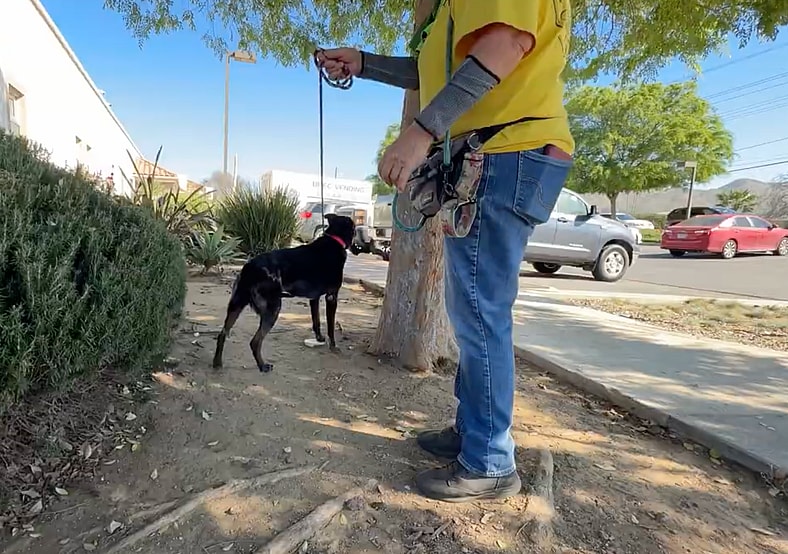
Once Mia got out with the volunteer dog walking team, it became even clearer: this dog is not broken.
She was fearful at first, tail tucked, moving carefully, but she walked. She sniffed. She processed. She started releasing some of that tension. And later, one of the volunteers even got kisses from her.
Kisses.
That is not a dog who is unreachable. That is a dog who needed decompression, patience, and someone willing to see past the shelter version of her.
The volunteers were incredible with her, and that part matters. Shelter dogs do not transform because of one magical moment. They transform because staff and volunteers keep showing up, again and again, with skill, patience, and love.
What Mia really needs next
Mia does not need blame. She does not need a label slapped on her forehead. And she definitely does not need to be reduced to “doesn’t like kids.”
What she needs is the right match.
She would likely do best in a home that understands herding breeds or is willing to learn. A calmer environment would help. Older kids might be fine, especially with structure and supervision, but a chaotic household with little kids running wild probably isn’t her dream setup. She needs clear boundaries, enrichment, affection, and someone who sees her intelligence as a gift, not a problem.
Training-wise, I’d focus on:
- confidence-building
- decompression walks
- nose work and sniff games
- pattern games for regulation
- appropriate outlets for her herding instincts
- slow introductions to new people and environments
This is a dog who wants connection. You can feel that. She just needs help trusting that connection again.
Mia’s story is not over
By the end of my time with her, Mia was taking treats from my hand, responding to her name, accepting touch, exploring toys, walking on leash, and letting her personality come through.
That is a huge amount of progress for a dog who started out looking completely shut down.
So no, I don’t think Mia is a lost cause.
I think Mia is a really good dog whose world got turned upside down.
And now she needs somebody willing to help her write a better ending.
Next steps for Mia
Mia should absolutely stay on the radar for the dog walking program and continue getting regular enrichment, gentle handling, and chances to decompress outside the kennel. She could also be a strong transport candidate if the right rescue or adopter comes forward. I even said I’d cover that cost, because a dog like this should not be overlooked just because she was hurting when I met her.
Underneath the fear is a sweet, smart, medium-sized cattle dog mix with soulful eyes, a ridiculously cute paw, and so much potential.
Mia moved after 47 minutes.
Now let’s help her keep moving forward.