This Broken Dog Wouldn’t Let Anyone Touch Him His Comeback Will Shock You
When I first met Bodie, he was pressed so tightly against the kennel wall it looked like he was trying to disappear into it.
Staff warned me: Be careful. He’s tried to bite.
He hadn’t eaten. He hadn’t slept. He was lunging at anyone who got too close. On paper, that makes him a bite risk. In real life, it meant something else.
It meant he was terrified.
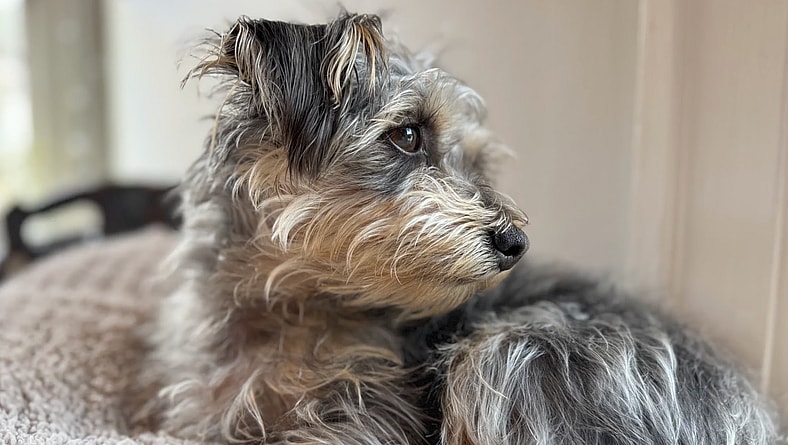
Today, that same dog naps on the back of a couch in San Francisco, goes to the park four or five times a day, and checks to make sure his mom is still home before drifting back to sleep. He has friends. He has structure. He has someone who calls him a good boy every day.
But getting there took time. And patience. And a whole lot of sitting.
The Dog Who Wouldn’t Let Anyone Touch Him
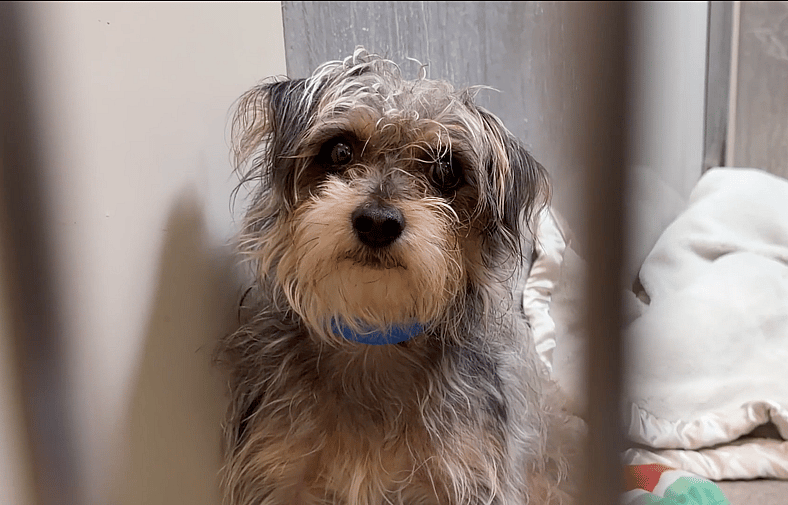
Bodie came into the shelter as a stray. No microchip. No owner. A Good Samaritan said he wandered into their yard looking for help, then started nipping at their dogs.
By the time he got to the shelter, he was unraveling.
He was about four years old, small, scruffy, likely a terrier mix with that big personality packed into a little body. Terriers are wired to be bold, alert, and protective. But in a loud kennel with constant movement and no familiar person? That wiring turns into survival mode fast.
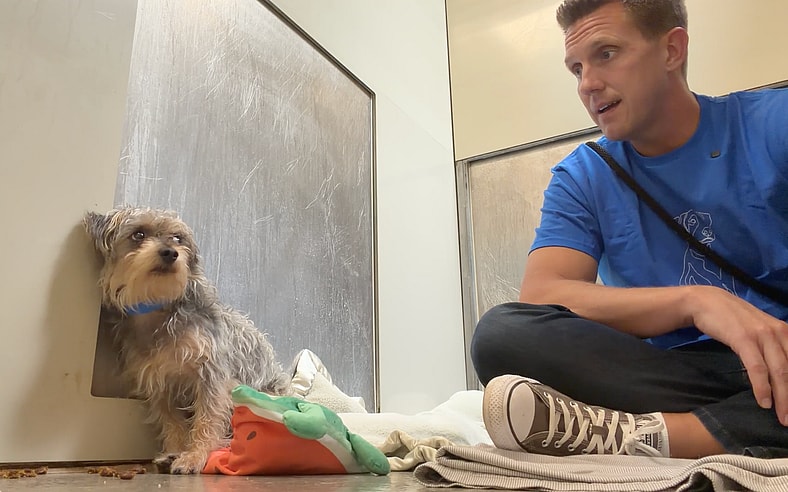
When I stepped into his kennel, he froze. No wag. No curiosity. Just wide eyes and a body locked against the wall.
I call it “shelter shut down.” It’s that moment when a dog realizes no one is coming for them.
I didn’t reach for him. I didn’t lean in. I tossed a small treat and looked away.
Fearful dogs don’t need pressure. They need space and choice.
At first, nothing.
Then he glanced at it.
That was the flicker.
Reading the Nervous System, Not the Personality
Here’s what people miss about dogs labeled “aggressive” in shelters: you’re not meeting their personality. You’re meeting their nervous system.
Bodie hadn’t slept. He hadn’t eaten. His cortisol was sky high. Every sound was a threat.
The staff told me something interesting. When they covered his head lightly with a towel during intake, he calmed enough to be handled. Less visual stimulus. Less overwhelm.
That’s a real training takeaway for anyone fostering a fearful dog:
- Reduce stimulation.
- Move slowly.
- Avoid direct staring.
- Use food as a low-pressure bridge, not a demand.
Eventually, I told him something simple: “You’re a good boy.”
And he felt it.
You could see the shift.
Convincing Kelly and Bringing Him to the Farm
Pulling a bite-risk dog isn’t a casual decision. My wife Kelly is good at asking the hard questions. We’re not set up to manage true, unpredictable aggression at the farm.
But I believed Bodie wasn’t aggressive. He was overwhelmed.
Kelly came to meet him herself. She took her time. No rushing. No forcing. Eventually, she scooped him up.
That’s when I knew he had a shot.
We brought him to Flip Farms.
That’s when the real work started.
The Part Nobody Sees After a Rescue
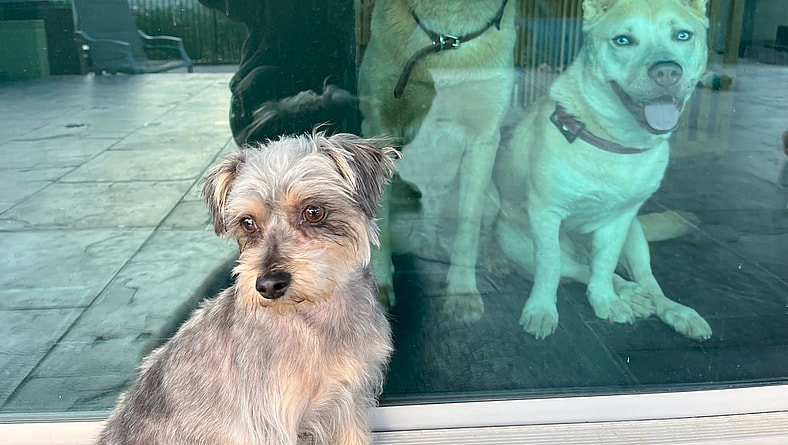
People think the happy moment is when the dog leaves the shelter.
That’s just the starting line.
At the farm, Bodie struggled. He tried to bite again. He didn’t like Pumpkin or Lily at first. He froze in new rooms. More than once, he peed when overwhelmed.
One day, I picked him up and he clung to me and soaked my shirt.
I can wash a shirt.
What mattered was what he was saying without words: This is too much. Hold me.
Healing isn’t linear. It’s ten steps forward, two back. Then another ten forward.
We worked on:
- Slow room introductions.
- Controlled exposure to other dogs.
- Short, positive training sessions.
- Building separation tolerance in small increments.
And slowly, his personality showed up.
He was funny. Confident. Silly. A little mischievous. Very terrier.
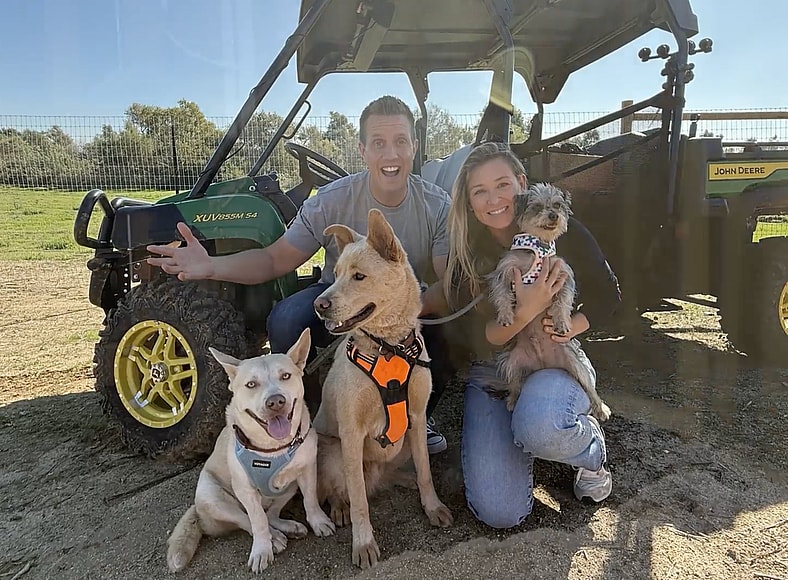
Choosing the Right Home
Hundreds of people applied to adopt Bodie.
That part always humbles me.
When we choose an adopter, we look at:
- Experience with anxious dogs.
- Household setup.
- Other pets.
- Lifestyle and energy level.
- Ability to commit to training.
Kelsey stood out.
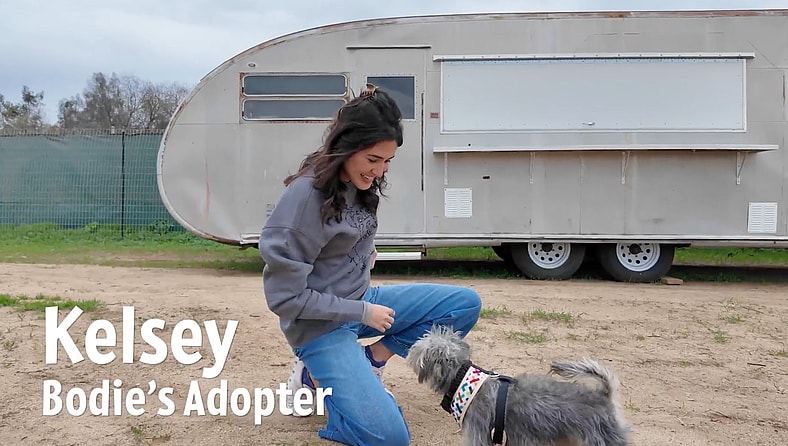
She had recently lost a dog named Yoda who had also been shut down when she adopted him. She knew what patience looks like. She applied twice because she felt like she hadn’t expressed enough how much she wanted him.
There was one complication. She had travel planned. She couldn’t come immediately.
We waited.
Sometimes the right home is worth waiting for.
Adoption Day
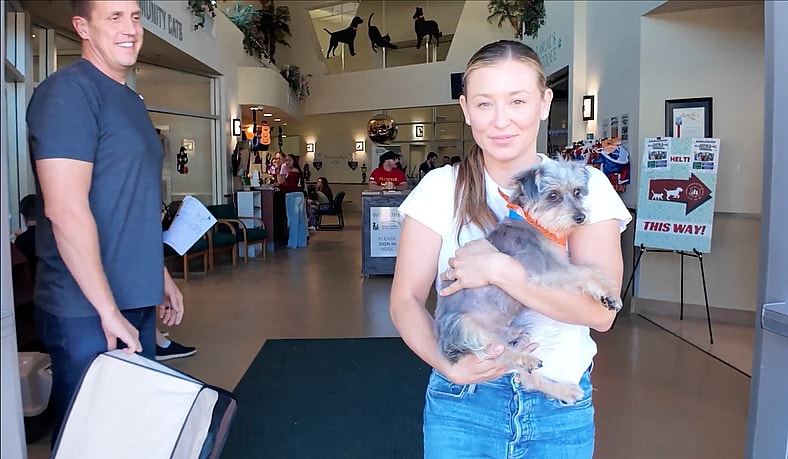
On adoption day, Bodie didn’t hug the wall.
He sat upright. Calm. Watching.
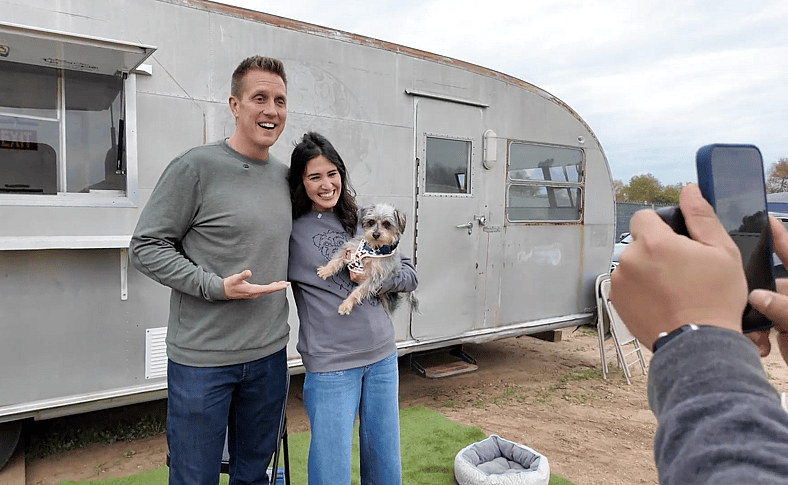
Kelsey showed up wearing a Bowtie shirt, his nickname from the shelter. She brought her parents too. Bodie wasn’t just getting a person. He was getting a support system.
When I handed him over, it was bittersweet. I always have that split second thought: I could just keep him.
But watching him settle into her arms, I knew.
He was ready.
One Month Later
A month after adoption, Kelsey sent an update.
Bodie now lives in San Francisco. He goes to the park multiple times a day. He naps on top of the couch and watches the world go by.

He still checks to make sure she’s there.
That’s common with dogs who’ve been abandoned. They “verify” their safety.
They’re working with a trainer on basic commands and separation confidence. He’s thriving.
She told me people who saw his original shelter video have reached out from around the world. They can’t believe it’s the same dog.
I can.
Because I’ve seen what happens when fear is met with patience instead of punishment.
What Bodie Taught Us
Bodie’s story isn’t about a miracle transformation.
It’s about:
- Reading fear correctly.
- Giving dogs time to regulate.
- Building safety before asking for obedience.
- Choosing adopters who understand the work.
He went from a dog staff had to lasso to a dog who naps peacefully overlooking a city park.
That doesn’t happen because someone “rescued” him.
It happens because a community showed up, a farm gave him space, and an adopter committed for the long haul.
Bodie wasn’t a bite risk.
He was a scared dog waiting for someone to sit long enough to see who he really was.
And now he’s exactly where he belongs.