
The Dog Breed Famous for Its “Double Dewclaws” Was Built for the Mountains
At first glance, the extra toes might look like a genetic quirk—or even a mistake. But for one powerful working breed, those unusual double dewclaws on the rear legs are no accident at all. They’re a defining feature, shaped by centuries of survival in rugged terrain.
That breed is the Great Pyrenees.
Often seen as a calm, cloud-white guardian watching over livestock, the Great Pyrenees carries a physical trait that sets it apart from nearly every other dog: two fully formed dewclaws on each rear leg. And unlike many “extra toes” that appear randomly in dogs, these are intentional, functional, and historically essential.
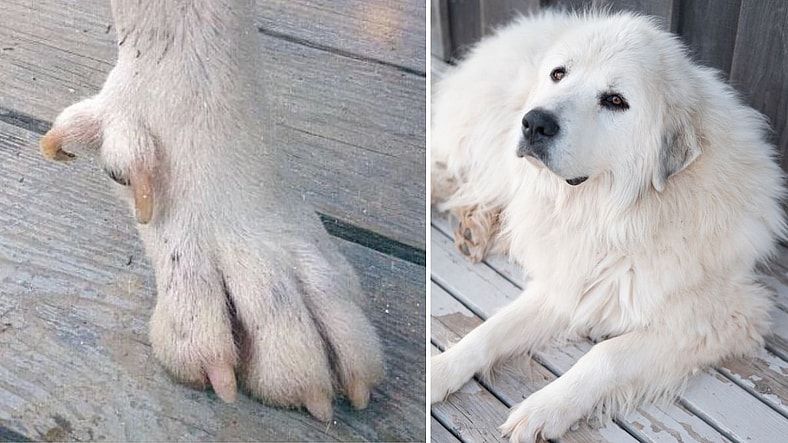
Built for Steep Slopes and Snowy Ground
The Great Pyrenees originated in the Pyrenees Mountains, a harsh, mountainous region separating modern-day France and Spain. For centuries, these dogs were bred to guard sheep against wolves and bears—often working alone, at night, and in extreme weather.
Those double rear dewclaws served a purpose.
The extra digits provided additional grip and stability, helping the dog navigate steep slopes, rocky terrain, deep snow, and uneven ground. Acting almost like natural snowshoes or crampons, the dewclaws helped anchor the dog’s hind legs while climbing or turning quickly on unstable surfaces.
Far from being decorative, they were part of the dog’s survival toolkit.
A Rare Trait Written Into the Breed Standard
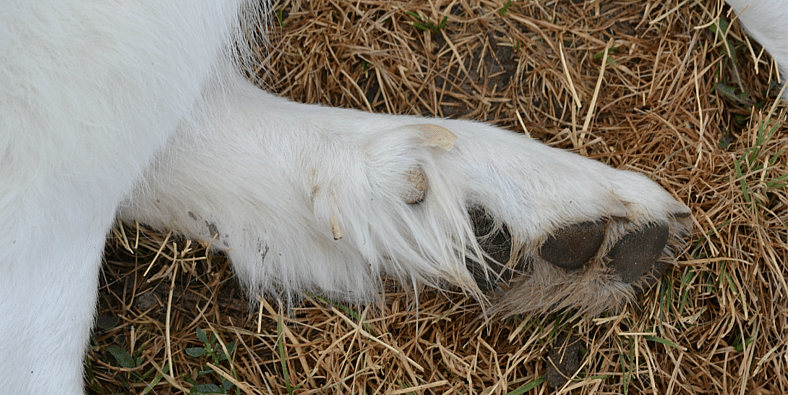
While dewclaws on the front legs are common in many breeds, rear dewclaws are unusual—and double rear dewclaws are rarer still.
In the case of the Great Pyrenees, they are not optional. Breed standards historically required two rear dewclaws on each hind leg, and their presence has long been used as a marker of correct breeding and lineage.
Other large working breeds—such as Bernese Mountain Dogs, St. Bernards, or Leonbergers—may occasionally have rear dewclaws, but they are typically single, inconsistently present, or removed early. None are defined by the trait the way the Great Pyrenees is.
More Than a Guardian’s Look

The Great Pyrenees is often mistaken for a gentle giant with purely ornamental beauty. In reality, every part of its body tells a story of function over form—from its thick weather-resistant coat to its massive bone structure and, yes, its double dewclaws.
These dogs were bred to think independently, make decisions without human direction, and stand their ground against predators much larger than themselves. Their physical traits reflect that responsibility.
Today, even as many Great Pyrenees live as companions rather than livestock guardians, those extra toes remain—a quiet reminder of a working history etched directly into their anatomy.
A Small Detail With a Big Story
So if you ever encounter a trivia question asking which dog breed is famous for double dewclaws on its rear legs, the answer isn’t just a fun fact.
It’s a window into how geography, danger, and purpose shaped one of the world’s most iconic guardian breeds.
The correct answer is the Great Pyrenees—and those extra toes tell a story of mountains, movement, and survival.