
Science Confirms Dogs Really Do Watch TV—And They Have Preferences
A brand-new July 2025 study published in Scientific Reports just confirmed what many dog parents already suspected: your dog isn’t just watching TV—they have favorite shows, and their personality shapes what they like.
Researchers at Auburn University surveyed over 450 dog owners and found that:
- Excitable dogs tend to follow moving objects on screen.
- Anxious or fearful dogs are more reactive to non-animal stimuli like doorbells or cars.
- And across the board, dogs respond far more to animals on screen than to inanimate objects.
Even more interesting? Dogs may actually perceive objects on screen similarly to how they perceive them in real life. That means TV isn’t just a noisy box—it’s a window into another world. And depending on your dog’s temperament, it could be a source of fun, comfort, or even stress relief.
So if your dog perks up when a golden retriever bounds into frame or loses their mind when a cartoon cat appears, it’s not a coincidence. It’s science.
Let’s dig into how this works, what your dog actually sees on screen, and the best ways to use TV as enrichment—especially if your pup tends to get anxious or bored when home alone.
Can Dogs Actually Watch TV?
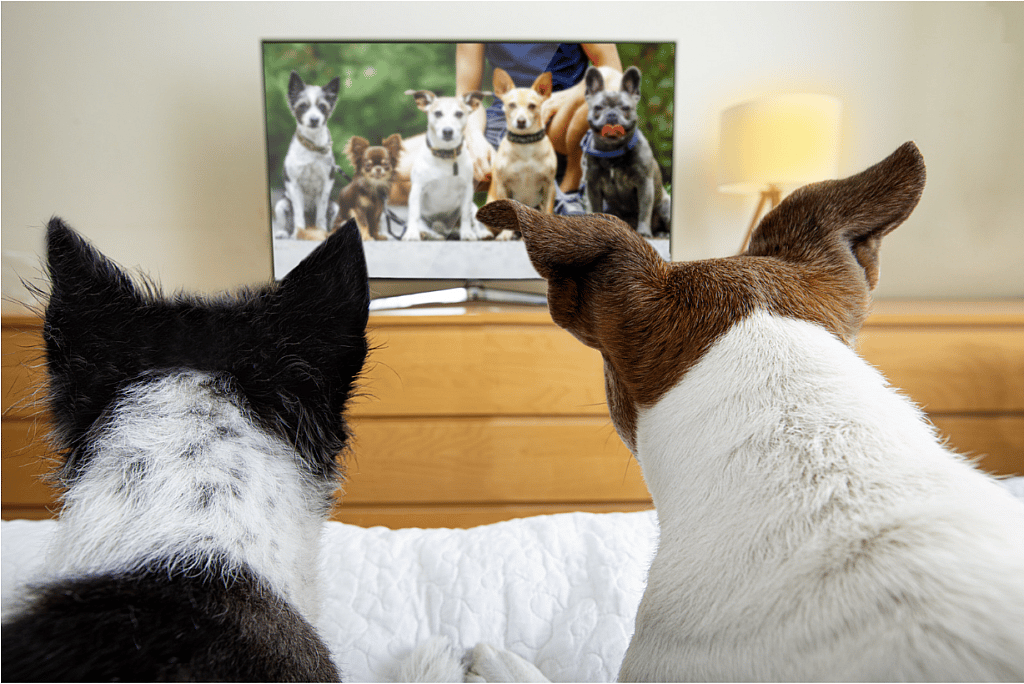
Yes! Dogs can—and do—watch television.
While there’s been some debate over the years, the science is catching up with what pet parents already know from experience: many dogs not only see what’s happening on screen, but some even seem to engage with it.
It’s not just about noticing movement. Some dogs will sit and watch for several minutes at a time, respond to certain scenes, or even appear to have favorite shows.
What Do Dogs See When They Look at a Screen?
You might’ve heard the myth that dogs can’t see TV because of how fast the frames flicker. That was a thing—back when TVs had low refresh rates. But modern flat screens update quickly enough that most dogs see smooth motion, not a flickering mess.
That said, dogs don’t see the world like we do. Their vision is:
- Dichromatic (they mainly see blues, yellows, and grays),
- Slightly blurrier than ours, and
- Exceptionally sensitive to motion.
So while a bright red fire truck might not pop the way it does to you, a squirrel sprinting across the screen? Unmissable.
Why Some Dogs Watch TV and Others Don’t

It’s not about intelligence, vision, or whether your dog “gets it.” Just like people, some dogs are visual, some are auditory, and some don’t care unless food is involved.
The 2025 study from Auburn makes it clear: personality is a major factor.
- High-energy dogs are more likely to track movement across the screen.
- Fearful dogs tend to respond to background noises or startling visuals.
- Some dogs aren’t interested unless there are animals on screen—and even then, only if it’s something they’d naturally react to (like prey or another dog).
Even if your dog ignores the TV, they might still enjoy the sound—especially if it mimics the vibe of a normal day with you at home.
Do Dogs Enjoy Watching TV?
Some do. Some don’t. And others will only watch when their favorite type of content comes on (yes, your dog may have genre preferences).
In a previous survey from the American Kennel Club and IAMS, nearly half of dog owners said their pets showed some interest in TV. The newer Auburn study adds that, on average, engaged dogs watched for about 14 minutes at a time—long enough to calm down, get stimulated, or at least stop chewing your throw pillows.

What Kind of TV Do Dogs Like?
According to the latest research, animals on screen are the biggest draw—dogs, cats, birds, you name it. Inanimate objects? Not so much.
Interestingly, the Auburn researchers found that visuals and sound were equally effective, but it was the type of stimulus that made the difference. A barking dog grabs attention whether it’s seen or heard.
So if you’re curating programming for your pup, think animal-focused, fast-moving, and upbeat.
TV as Enrichment: More Than Background Noise
TV can be more than just a distraction. For dogs with separation anxiety, high energy, or a tendency to get bored, the right TV content can be a meaningful enrichment tool.
The Auburn team even suggested this application in their study: “Engagement with television could provide dogs with an enriching, meaningful experience… including shelter dog enrichment.”
And that’s where things get interesting.
Dog-Friendly TV Options to Try
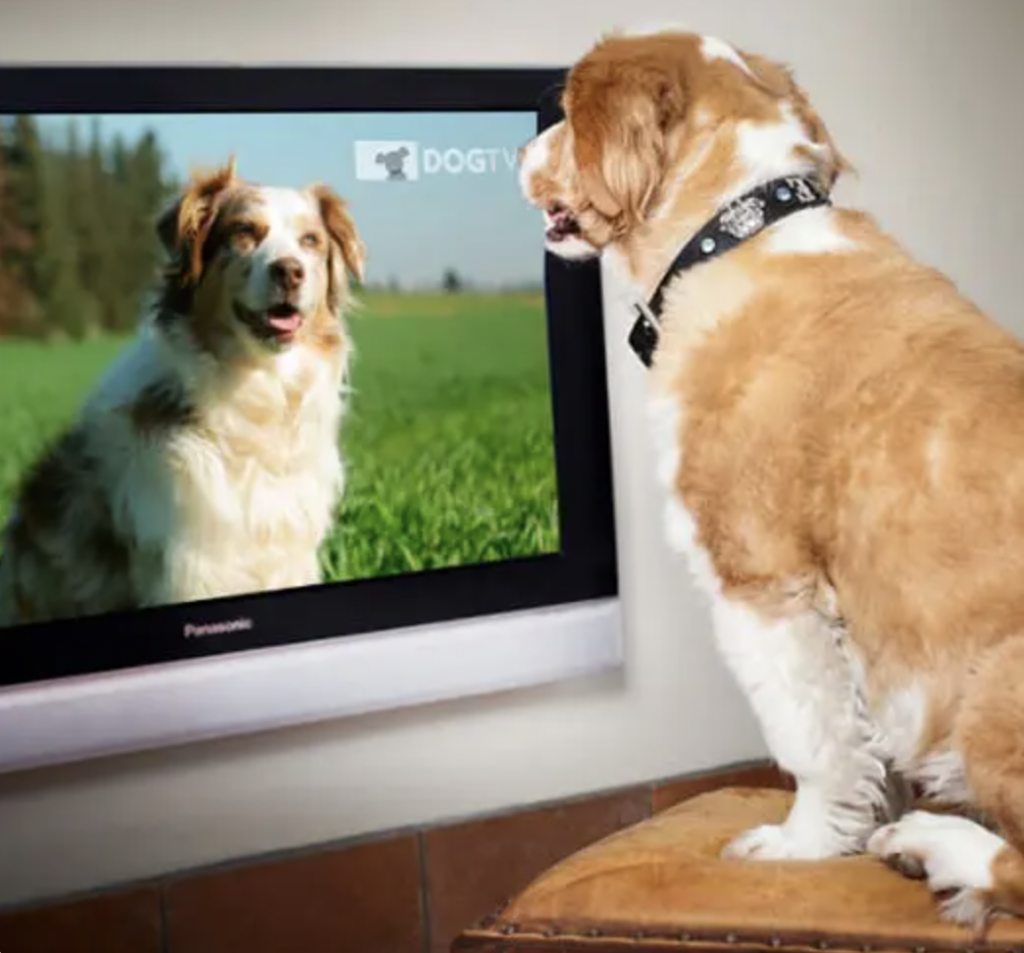
🐶 DOGTV
Yes, there’s a whole streaming service made just for dogs. DOGTV features programs designed with dogs’ unique sensory systems in mind, broken into three categories:
- Relaxation: Calming scenes and soothing music to reduce stress.
- Stimulation: Fast-moving animals, animations, and play sequences to engage the brain.
- Exposure: Content to help desensitize dogs to real-world triggers like vacuums, doorbells, and thunderstorms.
It’s not just background noise—it’s purposeful programming for pups. (And there are often free trials or discounted plans to test it out.)
📺 YouTube for Dogs
Search “videos for dogs” and you’ll find thousands of options—from birds chirping to squirrels running and dogs playing. It’s not always as curated as DOGTV, but it’s a great way to test the waters.
Start with content that features other dogs or animals, and pay attention to how your pup reacts.
Final Thoughts: Tune In to Your Dog’s Personality
The takeaway from the 2025 study and years of anecdotal evidence? Dogs can watch TV. Whether they want to depends on their personality, their past experiences, and maybe even their mood.
So next time you’re flipping channels, don’t be surprised if your pup has opinions—and maybe even a favorite show.
And if you catch them tail-wagging at The Lion King or growling at that one insurance commercial with the animated gecko? Just smile. Your dog’s a critic now.
Want to try some screen time with your pup? Start with short sessions, observe how they react, and tailor the experience to their preferences. You might just find your next binge-watching buddy already curled up on the couch.
Can Dogs See TV? FAQ
Let’s take a look at some of the other questions dog owners have about their pups watching TV.
Do intelligent dogs watch TV more than less intelligent dogs?
There isn’t a lot of evidence to suggest that intelligence has anything to do with whether or not a dog watches TV. Since all dogs can see TV equally, it appears that dogs who are more interested are those with higher prey drives, more alertness, and more interest in watching people or other animals, not necessarily the more intelligent dogs.
Do dogs like to watch TV when alone?
Some dogs really like to watch TV when alone! Leaving the TV on while you’re away can help your pup relax, especially if you put on a familiar program. If TV riles up your dog, then it’s probably not a good idea to leave on while you’re away.
Are there some dog breeds that watch TV more than others?
Breeds with a naturally higher prey drive and interest in chasing/watching may be more likely to watch TV than others. For example terriers and sighthounds may be more reactive to movement on the TV since they are typically more reactive to movement in real life.
Do dogs like watching TV with dogs?
Yes! Dogs can easily recognize other dogs on the TV, even if they are a completely different size or breed than themselves. Research suggests that many dogs actually prefer watching programs with dogs in them vs. content without dogs or other animals.
What does it mean when a dog watches TV?
It just means that your dog is interested! There’s nothing to do or worry about—your pup is just taking in the sights and sounds of the TV.
Can cats watch TV?
Yes! Cats can watch TV, and like dogs, some of them really enjoy it! Cats are especially prone to trying to catch or play with images on screen, something dogs are less likely to do.